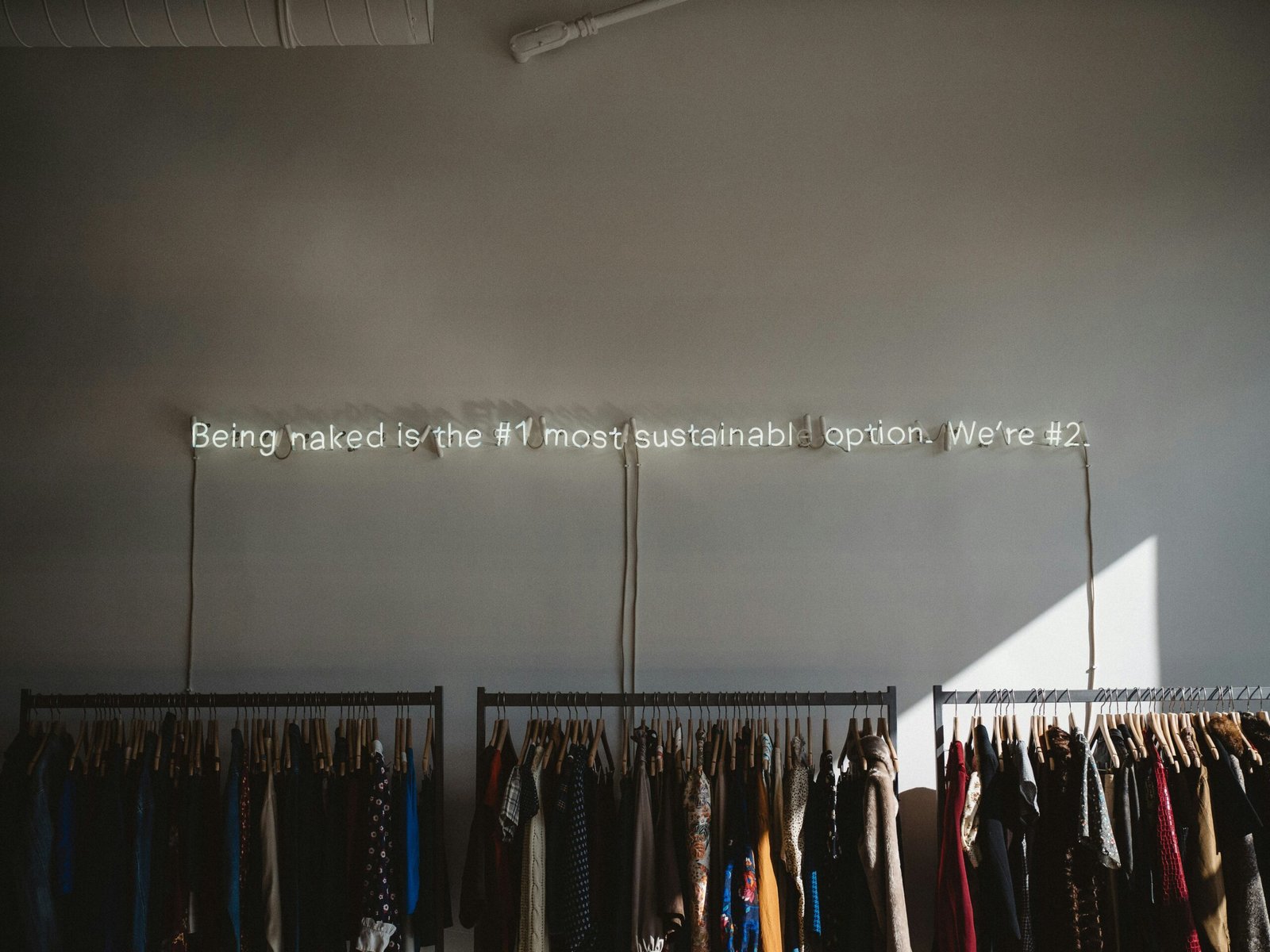
Not long ago, if you told someone that the future of fashion was green, they might have imagined shapeless hessian sacks and sandals made from recycled tyres. Worthy, perhaps — but hardly the stuff of runway dreams. That image is now so thoroughly out of date it’s almost funny. Because in 2026, sustainable fashion isn’t a compromise. It’s a creative revolution.
The fashion industry has historically been one of the most environmentally damaging on earth, second only to oil in some assessments of global pollution. The rise of fast fashion accelerated that damage dramatically, making cheap, disposable clothing the global norm and flooding the world with garments designed to be worn twice and forgotten. But something has been building in response to all of that. A movement. An awakening. And in 2026, it has arrived with full force — and full style.
From Copenhagen’s sustainability-mandated fashion week to Stella McCartney’s decades-long campaign for ethical luxury, from Patagonia’s radical transparency to the Gen Z consumers who are making secondhand shopping genuinely cool — the sustainable fashion story is one of the most exciting and consequential in the industry’s history. At fashioncore.space, here is everything you need to know about the trends, the designers, and the ideas that are changing fashion for good.
10%Global carbon emissions from fashion
$9.8BSustainable fashion market in 2026
73%Gen Z prefer sustainable brands
Why Sustainable Fashion Is the Defining Story of 2026
To understand why sustainable fashion has moved so decisively from the margins to the mainstream, you need to understand two converging forces: the scale of fashion’s environmental problem, and the speed at which consumer values have shifted to demand something better.
The fashion industry produces roughly 10% of global carbon emissions annually. It is the world’s second-largest consumer of water. The synthetic fibres — polyester, nylon, acrylic — that fill the majority of fast fashion garments shed microplastics into waterways every time they’re washed, with researchers now finding these particles in the most remote oceans, in soil, in rainfall, and increasingly in human bodies. These are not abstract statistics. They are the measurable legacy of decades of treating clothes as disposable objects with no downstream consequences.
Against this backdrop, a generation of consumers — led but not limited to Gen Z — has arrived with different expectations. They want to know where their clothes come from. They want to understand who made them and in what conditions. They want to be able to wear something beautiful without feeling complicit in something damaging. And increasingly, they’re willing to pay more, buy less, and shop differently to make that happen. The brands and designers who understood this shift early are now reaping the rewards.
Industry Insight: The EU’s landmark Green Claims Directive, fully enforced in 2026, now requires all fashion brands operating in European markets to substantiate any environmental marketing claims with verified data. Vague language like “eco-friendly” or “conscious collection” without evidence is no longer permitted — a regulation that has already forced dozens of brands to either commit properly to sustainability or quietly drop the greenwashing language.
The Six Biggest Sustainable Fashion Trends Right Now
Trend 01 · Circular Economy
Circular Fashion: The End of the Linear Model
The most structurally significant trend in sustainable fashion is the shift toward circular economy principles — designing clothes not for disposal, but for return, repair, reuse, and eventual material recovery. Brands like Eileen Fisher, which operates a robust take-back and resale programme, and Patagonia, which has offered free repairs long before sustainability was fashionable, are the benchmarks. In 2026, circularity has moved from a niche commitment to a commercial strategy, with major brands including Zara and H&M investing seriously in take-back infrastructure. The quality of those programmes varies enormously, but the direction of travel is clear.
Trend 02 · Material Innovation
Next-Generation Fabrics: Fashion’s Material Revolution
One of the most genuinely exciting frontiers in sustainable fashion is material innovation — the development of new fibres and fabrics that deliver the performance and aesthetics of conventional materials without the environmental cost. Mycelium leather (grown from mushroom roots), Piñatex (made from pineapple leaf fibres), and lab-grown silk are no longer science experiments — they’re being used in commercial collections by brands including Stella McCartney and Hermès. Meanwhile, regenerative organic cotton — grown in ways that actively improve soil health rather than degrading it — is gaining serious traction as a premium fibre choice across both luxury and accessible fashion segments.
Trend 03 · Slow Fashion
Buying Less, Choosing Better: The Slow Fashion Philosophy
The slow fashion movement — which prioritises quality, longevity, and intentionality over the relentless churn of fast fashion trends — has found its cultural moment in 2026. It’s not simply about buying expensive things; it’s about buying fewer things that are genuinely worth keeping. Designers like Christophe Lemaire, who build collections around pieces designed to last for decades, and the entire “new contemporary” tier of brands like Toteme and Sézane, are offering consumers an alternative to the fast-fashion-or-nothing binary. The philosophy has also given new life to the concept of the “capsule wardrobe” — a small, curated collection of versatile, well-made pieces that form the foundation of a thoughtful wardrobe.
Trend 04 · Secondhand & Resale
The Secondhand Revolution: Pre-Loved Goes Premium
The resale market has been growing at an extraordinary speed, and in 2026, it will have fully normalised as a mainstream shopping behaviour across all age groups and income levels. ThredUp, Depop, Vestiaire Collective, and The RealReal are now household names among fashion-conscious consumers globally. But the more significant development is the mainstreaming of secondhand at the brand level: Levi’s, Burberry, Dr Martens, and dozens of others now operate official resale platforms, acknowledging that the secondary market for their products is not a threat to be managed but an opportunity to be embraced. In 2026, buying pre-owned is not a compromise — it’s a statement of values and increasingly a flex.
Trend 05 · Upcycling & Craft
Upcycled Fashion: Turning Waste into Art
Upcycling — the practice of transforming discarded or waste materials into new garments — has become one of sustainable fashion’s most creatively exciting expressions. From Marine Serre’s iconic crescent-moon pieces made from deadstock and recycled materials, to independent designers who create extraordinary one-of-a-kind pieces from reclaimed fabrics, upcycled fashion is where sustainability and pure creative ambition meet most powerfully. The aesthetic of visible history — the sense that a garment carries the story of the materials it was made from — has become genuinely desirable rather than an indicator of compromise.
Trend 06 · Transparency
Radical Brand Transparency: Know Your Supply Chain
Perhaps the most fundamental shift in sustainable fashion is the demand for transparency — the expectation that brands will tell you, clearly and verifiably, where their clothes are made, who made them, what materials were used, and what the environmental footprint of production was. Brands like Everlane and Veja built their entire identities on this principle. In 2026, the EU’s mandatory supply chain disclosure requirements have made transparency not just good practice but a legal obligation for any brand operating at scale in European markets — a seismic shift with global ripple effects.
“Sustainability in fashion is no longer about sacrifice. It’s about the realisation that the most beautiful thing you can wear is something made with care — for the planet, for the people who made it, and for the future.”
Brands Leading the Sustainable Fashion Revolution
These are the labels whose commitment to sustainability goes beyond marketing — they’re building genuinely different models for how fashion can be made and sold.
🌿
Stella McCartney
The original luxury sustainability pioneer. McCartney has built a fully leather-free, fur-free luxury brand without sacrificing an ounce of desirability. Her partnerships with Bolt Threads on mycelium leather and ongoing supply chain transparency set the standard for what luxury sustainability can look like. Luxury Sustainable
🍍
Veja
The French sneaker brand that proved transparency and ethics are a commercial superpower. Veja pays above-market prices to cotton farmers in Brazil, uses Amazonian rubber for soles, and communicates its supply chain with remarkable openness. Its consistent waitlists prove that ethical fashion doesn’t require aesthetic compromise. Ethical Supply Chain
🌊
Patagonia
The brand that literally told customers “Don’t Buy This Jacket” in a full-page ad because it wanted people to consume less. Patagonia’s repair programme, its 1% for the Planet commitment, and its decision to effectively donate the company to environmental causes make it the most radical sustainability case study in the industry.Circular & Repair
🔄
Marine Serre
The LVMH Prize-winning French designer has made upcycling and deadstock use central to her design identity rather than a footnote. Serre’s collections routinely achieve over 40% recycled or upcycled content — without the aesthetic looking remotely like a compromise. She is proving that circular design can be genuinely avant-garde. Upcycled Couture
How Sustainable Are We, Really? The Honest Scorecard
For all the progress, it’s important to be clear-eyed about where the industry actually stands. Greenwashing — the practice of making misleading environmental claims without substantive action — has been rampant, and many of the industry’s most visible “sustainability” initiatives are, under scrutiny, more marketing than transformation.
Luxury brands with verified sustainability commitments62%
Fast fashion brands with credible circular programmes28%
Consumers actively prioritising sustainable fashion41%
Fashion brands publishing full supply chain data19%
The numbers tell a story of genuine progress in some areas and significant gaps in others. The luxury sector is moving faster than fast fashion, partly because its higher margins can absorb the cost of sustainable practices and partly because its brand equity depends on quality and longevity — values that naturally align with sustainability. Fast fashion’s fundamental business model — volume, speed, low prices — is harder to reconcile with genuine environmental responsibility, and the brands operating in this space have the furthest to travel.
Three Pillars of the Sustainable Fashion Future
🌱
Better Materials
Next-generation fibres, regenerative agriculture, and material science innovation are transforming what clothes can be made from.
👐
Fairer Labour
Living wages, safe conditions, and genuine worker representation throughout global supply chains — the human side of sustainability.
♻️
Circular Systems
Design for longevity, repair infrastructure, and material recovery at the end of life — closing the loop on fashion’s linear waste model.
Fashion Can Be a Force for Good — And It’s Becoming One
The rise of sustainable fashion is not a trend that will peak and fade. It’s a fundamental restructuring of how the industry thinks about its relationship with the planet, with the people in its supply chains, and with the consumers who ultimately decide its fate. And in 2026, that restructuring is accelerating.
The designers and brands doing this work well — Stella McCartney, Marine Serre, Veja, Patagonia, and the scores of independent labels building genuinely different models — are demonstrating something important: that sustainability and beauty are not in conflict. That a dress made from mushroom leather or deadstock silk can be every bit as breathtaking as one made from conventional materials. That knowing your clothes were made ethically, by people paid fairly, with materials that don’t poison the earth, makes them more beautiful, not less.
The fashion industry’s journey toward genuine sustainability is long, and the honest scorecard shows there is much further to travel. But the direction is set, the consumer demand is real, and the creative talent committed to making this transformation beautiful is extraordinary. At fashioncore.space, we’ll keep telling this story — because it is, without question, one of the most important stories fashion has ever had to tell.
Frequently Asked Questions: What is sustainable fashion, and why does it matter?
Sustainable fashion refers to clothing, accessories, and the overall fashion system that is designed, produced, distributed, and consumed in ways that minimise environmental damage and promote social fairness. It matters because the conventional fashion industry is one of the world’s most polluting, responsible for approximately 10% of global carbon emissions, enormous water use, and significant microplastic pollution. Sustainable fashion offers a path toward an industry that can be beautiful and creative without those environmental and human costs. Which sustainable fashion brands are leading the way in 2026?
The most credible and influential sustainable fashion brands in 2026 include Stella McCartney (luxury, leather-free), Patagonia (outdoor wear, radical circularity), Veja (ethical footwear, supply chain transparency), Marine Serre (upcycled couture), Eileen Fisher (women’s wear, take-back programme), and Veja. At the Copenhagen Fashion Week level, brands like Ganni, Stine Goya, and Rotate are operating under increasingly rigorous sustainability standards. Among accessible brands, Arket and COS are both making genuine efforts with organic materials and circularity programmes. What is greenwashing, and how can I spot it?
Greenwashing is when a brand makes environmental claims — “eco-friendly,” “conscious,” “green” — that are not substantiated by genuine action or verified data. Warning signs include vague language without specific commitments or data, small “conscious” ranges that represent a tiny fraction of total production, claims about recycled materials that don’t address the broader production process, and a lack of third-party certification. Look for specific data, credible certifications (GOTS, B Corp, Fair Trade), and brands that publish comprehensive annual sustainability reports with measurable targets and honest assessment of progress. How can I make my own wardrobe more sustainable?
The most impactful individual actions are: buy less and choose better quality pieces that will last longer; shop secondhand and pre-owned wherever possible; care for your clothes properly to extend their lifespan (wash less, at lower temperatures, air dry); repair rather than replace; and when buying new, research the brand’s sustainability credentials rather than just accepting marketing claims. Building a capsule wardrobe of versatile, well-made pieces is one of the most effective strategies — it reduces the pressure to keep buying while ensuring you always have something to wear. © 2026 fashioncore.space · All Rights Reserved · Fashion With a Future