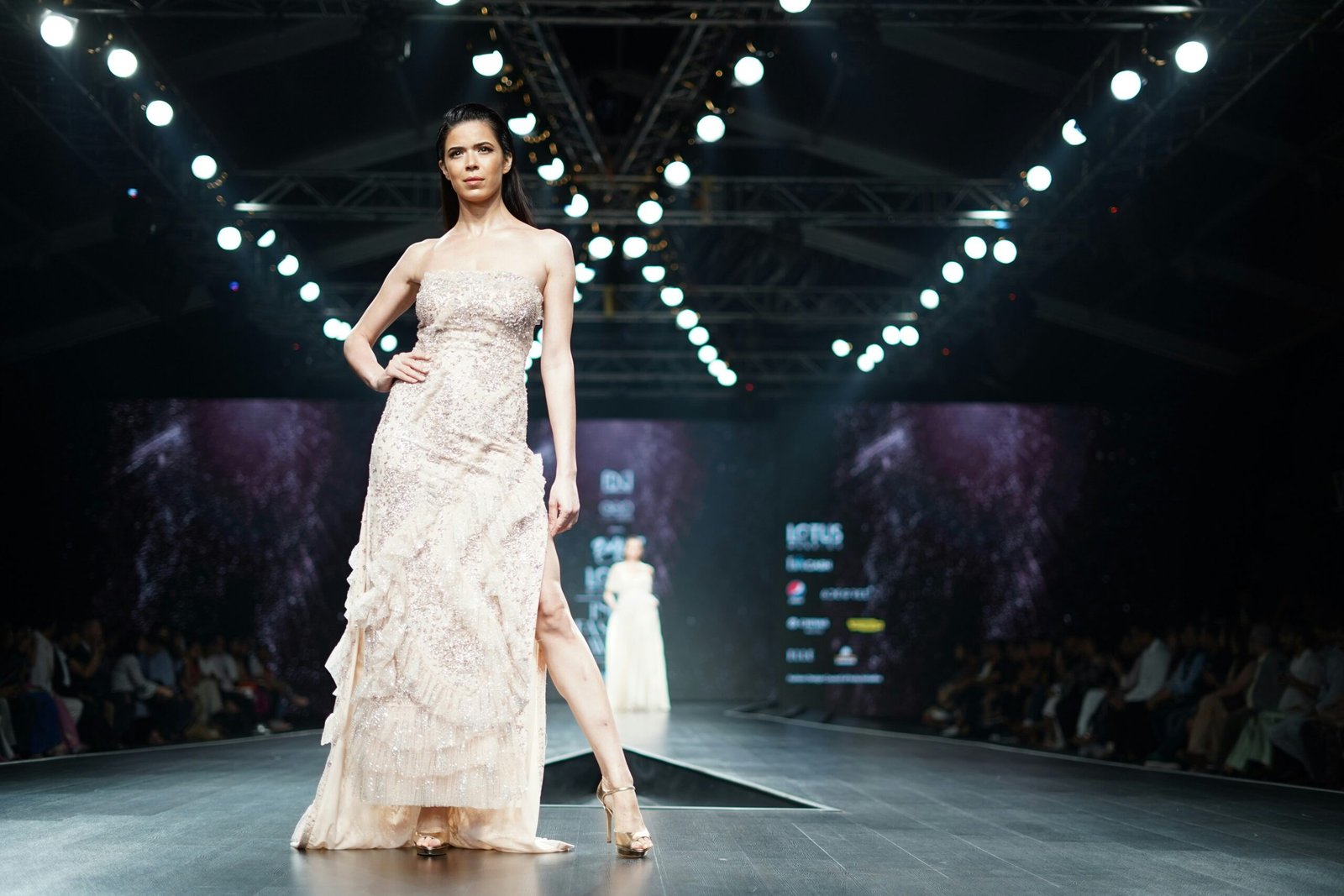
Imagine waking up in New York on a grey February morning to the sound of a fashion crowd buzzing outside a converted warehouse in the Meatpacking District. By the following week, you’re watching models emerge from a centuries-old Milanese palazzo into golden afternoon light. A few days after that, Paris has taken over — and the entire world holds its breath to see what the great houses have conjured this season. This is the rhythm of Fashion Month: four cities, thousands of looks, and billions of conversations sparked across every screen on earth.
But here’s the thing that often gets lost in the glamour of the Big Four — New York, London, Milan, and Paris are no longer the only voices that matter. The global fashion conversation in 2026 is genuinely that: global. From Copenhagen’s sustainability-forward shows to Seoul’s cultural dynamism, from Lagos’s explosive emergence to São Paulo’s vibrant creativity, fashion weeks around the world are reshaping what the industry looks like, who it speaks to, and where the next big idea is coming from.
At fashioncore.space, we’ve tracked every major fashion week on earth. Here is your definitive guide to the world’s most important fashion weeks — what makes each one special, which designers to watch, and why they all matter.
The Big Four: Where Fashion History Lives
The Big Four fashion weeks are the backbone of the global fashion calendar. They set the tone, establish the trends, and attract the most concentrated attention from press, buyers, and consumers worldwide. Understanding what each city brings to the table is essential to understanding how fashion itself thinks.
🗽
Big Four · Stop 01
New York Fashion Week
📅 February & September
New York Fashion Week opens Fashion Month every season with a distinctly American energy — practical, optimistic, commercially savvy, and increasingly diverse. NYFW has always had a special relationship with wearability: New York designers understand that fashion needs to work in real life, not just on a runway.
In 2026, NYFW is in a fascinating transitional moment. Legacy brands like Ralph Lauren and Marc Jacobs continue to anchor the calendar with shows that deliver cultural weight, while a new generation — including designers like Telfar Clemens, Willy Chavarria, and Khaite’s Catherine Holstein — is bringing a freshness and urgency that keeps the city’s fashion scene vital. The rise of gender-fluid and community-centred fashion has found some of its most compelling expression in New York, making NYFW a genuinely exciting destination for the ideas that will shape mainstream fashion two to three seasons from now.
TelfarMarc JacobsWilly ChavarriaKhaiteRalph Lauren
🎡
Big Four · Stop 02
London Fashion Week
📅 February & September
London Fashion Week has always been the rebel of the Big Four — the place where fashion school graduates become cultural provocateurs, where conceptual ideas get their first public airing, and where the industry goes to be genuinely surprised. Central Saint Martins, the legendary arts college, continues to supply a stream of remarkable talent that keeps London at the forefront of fashion’s avant-garde.
The 2026 London season has been particularly electric. Designers like Simone Rocha, Nensi Dojaka, and Bianca Saunders continue to make shows that feel like genuine artistic events rather than commercial presentations. The British Fashion Council’s NewGen programme has been exceptional at nurturing new talent, and the city’s multicultural DNA gives London fashion a richness and complexity that few cities can match. LFW in 2026 isn’t just a fashion week — it’s a statement about what fashion can be when it’s allowed to breathe.
Simone RochaNensi DojakaBianca SaundersBurberryJW Anderson
🏛️
Big Four · Stop 03
Milan Fashion Week
📅 February & September
If Paris is fashion’s philosophical heart, Milan is its luxurious backbone. Milan Fashion Week is where craftsmanship is worshipped, where the world’s most powerful fashion conglomerates present their most commercially significant collections, and where the Italian tradition of making beautiful things with extraordinary skill is on full, glorious display.
Prada, Gucci, Versace, Bottega Veneta, Fendi — the lineup of houses showing in Milan reads like a Who’s Who of fashion’s most valuable intellectual property. But it’s not all heritage and luxury muscle. Younger Italian designers and international talents who’ve set up in the city are bringing fresh perspectives to a calendar that, at its best, represents the most satisfying balance between creativity and commerce in fashion. In 2026, Matthieu Blazy’s continued evolution at Bottega Veneta and Sabato De Sarno’s developing vision at Gucci are the stories to watch most closely.
PradaBottega VenetaGucciVersaceZegna
🗼
Big Four · Stop 04
Paris Fashion Week
📅 February/March & September/October
Paris Fashion Week is the undisputed finale of Fashion Month, and it carries that weight with full awareness. To show in Paris — especially in the Prêt-à-Porter or Haute Couture calendars — is to position yourself at the apex of fashion ambition. The city’s relationship with style runs bone-deep, and even a brief walk from show venue to show venue through Haussmann’s grand boulevards feels like moving through a living fashion history book.
In 2026, Paris is demonstrating that it remains the most creatively fertile stop on the calendar. The legacy houses — Chanel, Dior, Hermès, Louis Vuitton, Saint Laurent — continue to set the global conversation, while a constellation of younger designers like Glenn Martens (at Y/Project and Diesel), Chemena Kamali’s revival of Chloé, and Haider Ackermann’s new chapter at Tom Ford are generating extraordinary excitement. Paris in 2026 is proof that fashion’s centre of gravity, after all these years, still has a very clear address.
ChanelDiorHermèsJacquemusChloéY/Project
“The Big Four will always matter — but the most exciting fashion story of 2026 is being written in cities that didn’t even have a fashion week ten years ago.”
Beyond the Big Four: The Fashion Weeks Changing Everything
The most interesting development in global fashion over the last decade isn’t what happened on the runways of Paris or Milan. It’s the emergence of fashion weeks in cities that are bringing genuinely new cultural perspectives to an industry that had, for too long, been dominated by a very small geographic and cultural circle.
🌿
Rising Power · Scandinavia
Copenhagen Fashion Week
📅 January & August
Copenhagen Fashion Week has quietly become one of the most important fashion events on the global calendar — not because of the scale of its shows, but because of the seriousness of its sustainability agenda. CPHFW requires all participating brands to meet a rigorous set of environmental and ethical standards, making it the world’s most credible green fashion week. In an industry still grappling with its environmental impact, Copenhagen’s model is increasingly influential.
Brands like Stine Goya, Rotate Birger Christensen, and Ganni have built genuinely global audiences from this Nordic base, while the city’s inherent design sensibility — clean, considered, effortlessly stylish — gives every collection a coherent aesthetic backdrop that feels Copenhagen unmistakably.
GanniStine GoyaRotateSustainability Focus
🇰🇷
Rising Power · East Asia
Seoul Fashion Week
📅 March & October
Seoul Fashion Week is one of the most electric events on the global fashion calendar in 2026, riding an extraordinary wave of Korean cultural influence that shows absolutely no sign of slowing. K-pop, K-drama, and K-beauty have made Korean aesthetics globally aspirational, and Seoul Fashion Week is where that cultural energy meets cutting-edge design.
The shows here blend streetwear and tailoring in ways that feel uniquely Korean — precise, expressive, and acutely aware of the power of image. Designers like Kusikohc, Münn, and Blindness are creating work that resonates far beyond the peninsula, and international brands are increasingly seeking collaborations with Korean creatives to access this extraordinary cultural momentum.
KusikohcMünnK-FashionStreetwear
🌍
Rising Power · West Africa
Lagos Fashion Week
📅 October
Lagos Fashion Week is perhaps the most exciting story in global fashion right now. Founded in 2011, it has grown into Sub-Saharan Africa’s most significant fashion event, showcasing designers who are redefining what African luxury means on a global stage. This isn’t fashion “inspired by” African culture — it is African culture, expressed through extraordinary craft, colour, and creative vision.
Designers like Torishéju Dumi, Kenneth Ize, and Fruché are representing a new generation of African fashion talent that refuses to be categorised as anything other than world-class. With Nigeria’s young, enormous, and fashion-hungry consumer market growing rapidly, Lagos Fashion Week’s trajectory is pointing in one direction only: up.
Kenneth IzeFruchéTorishéju DumiAfrican Luxury
Fashion’s Global Footprint: Cities to Watch
Beyond the cities we’ve highlighted in depth, a broader global fashion ecosystem is thriving:
São Paulo, Brazil
SPFW — Latin America’s biggest fashion week, celebrating Brazilian creativity and cultural pride.
Tokyo, Japan
Tokyo Fashion Week — where avant-garde meets subculture; home to Comme des Garçons DNA.
Dubai, UAE
Dubai Fashion Week — the fastest-growing luxury fashion event, bridging East and West.
Mumbai, India
Lakmé Fashion Week — South Asia’s premier platform for Indian design on a global stage.
Sydney, Australia
AFW — bringing the Southern Hemisphere’s distinctive outdoor-luxe aesthetic to global attention.
Tbilisi, Georgia
Tbilisi Fashion Week — one of Europe’s best-kept secrets, producing wildly original talent.
Industry Insight: In 2026, over 40 cities worldwide host recognised fashion weeks, up from just a handful two decades ago. The democratisation of fashion’s geographic conversation is one of the most significant structural shifts the industry has ever undergone — and it’s accelerating.
Every City Has a Story. Fashion Weeks Tell It Best.
What makes fashion weeks irreplaceable — even in an age of social media, digital lookbooks, and virtual runways — is the physical, communal energy of people gathering to experience something together. Fashion weeks create moments: the gasp when a collection defies expectations, the buzz when a new designer announces themselves to the world, the quiet satisfaction of watching a great house at the absolute peak of its powers.
But perhaps more than anything else, the global expansion of fashion weeks tells us something important about the industry’s future. Fashion’s most valuable ideas will increasingly come from unexpected places — from Lagos and Seoul and Tbilisi as much as from Paris and Milan. The designers who understand the full richness of that global conversation will be the ones who shape what fashion looks like in the decades ahead.
At fashioncore.space, we’ll be at every show — in person, in spirit, and on every page of this site. Fashion is a world tour, and we’re your guide. The next stop is always the most exciting one.
Frequently Asked Questions: What are the Big Four fashion weeks, and when do they take place?
The Big Four fashion weeks are New York (February & September), London (February & September), Milan (February & September), and Paris (February/March & September/October). Together they form “Fashion Month,” the industry’s most important seasonal calendar event, attended by editors, buyers, celebrities, and fashion press from around the world. Which fashion week is considered the most prestigious?
Paris Fashion Week is widely regarded as the most prestigious of the Big Four, particularly its Haute Couture schedule, which showcases the most technically exquisite and expensive garments in the world. However, each city carries distinct prestige in its own right — Milan for craftsmanship and luxury, London for creative innovation, and New York for commercial relevance and cultural diversity. Are there important fashion weeks outside of Europe and North America?
Absolutely — and this is one of the most exciting stories in fashion right now. Copenhagen Fashion Week is globally influential for its sustainability standards. Seoul Fashion Week is one of the most culturally dynamic events on the calendar. Lagos Fashion Week is redefining African luxury. São Paulo, Tokyo, Dubai, Mumbai, and Tbilisi all host significant fashion weeks with growing international impact. Can regular fashion lovers attend fashion week shows?
Most runway shows are invitation-only, reserved for press, buyers, and VIP guests. However, many fashion weeks now host public-facing events, pop-ups, and open showrooms alongside the main schedule. Digital livestreaming has also made fashion week far more accessible — many houses now broadcast their shows in real time, meaning anyone with an internet connection can watch the world’s best designers unveil their new collections. © 2026 fashioncore.space · All Rights Reserved · Your Passport to Global Fashion